As oral hygiene deteriorates worldwide, more and more dentists are switching to this new alternative to traditional toothbrushes.
By Dr. Joseph Woods DDS | Aug 20, 2025
Do you brush twice a day but still have sensitive teeth?
Do your gums bleed when you floss?
Have you noticed your teeth looking more yellow despite "doing everything right"?
You're not alone. And here's the part that might surprise you:
It's not your fault.
The Problem Isn't You - It's The Tool
Dr. James Wilson had seen it hundreds of times in his Chicago dental practice.
Patients who brushed religiously. Who flossed. Who used expensive electric toothbrushes and whitening strips.
And yet, they kept coming back with the same problems:
Cavities depsite "perfect" oral hygiene
For years, Dr. Wilson did what most dentists do: he gave them the standard advice.
"Brush for two full minutes."
"Make sure you're reaching the gumline."
"Floss every single day."
But something bothered him. His patients were following the rules. They were trying.
So why weren't their teeth getting healthier?
The Discovery That Changed Everything
One afternoon, Dr. Wilson was reviewing research on dental plaque formation—specifically, studies on how biofilm develops on tooth surfaces.
And that's when he found something shocking:
Traditional toothbrushes can only physically reach about 60% of your tooth surfaces.
Even with perfect technique. Even with an expensive electric brush.
The problem isn't the bristles. It's not the toothpaste. It's not even your technique.
It's the fundamental design of brushing one tooth at a time.
Think about it: You have to manually guide the brush to each surface, each angle, each gap.
You're relying on your memory, your patience, and your consistency to clean 32 teeth with hundreds of surfaces.
And here's what the research showed:
Most people spend only 45-60 seconds brushing (not the recommended 2 minutes).
They miss the back molars.
They don't angle the brush toward the gumline.
They apply uneven pressure.
The design itself guarantees that most people will fail.
The Coverage Problem Nobody Talks About
Dr. Wilson realized the real issue wasn't how people brush.
It was that traditional brushing requires you to be in dozens of different places sequentially when your mouth needs cleaning everywhere simultaneously.
Here's what happens with a regular toothbrush:
While you're carefully cleaning your front teeth, bacteria are multiplying on your molars.
While you focus on the top, plaque is settling on the bottom.
By the time you finish, the areas you cleaned first have already started accumulating bacteria again.
It's like trying to mop a floor one square inch at a time while it's still raining.
And the areas you can't easily reach—between teeth, along the gumline, the inner surfaces of back molars - those are exactly where problems start:
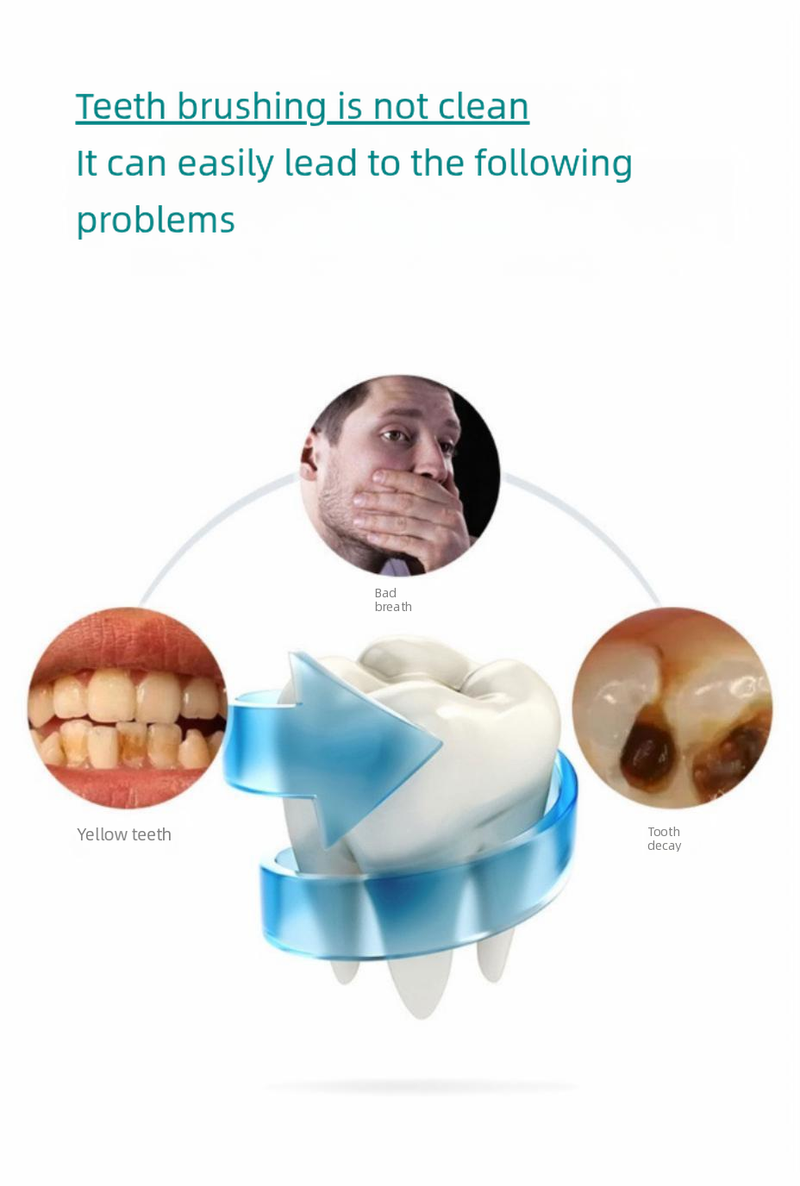
Gum disease begins at the gumline you can't quite reach
Cavities form between teeth your bristles can't access
Plaque hardens into tartar in spots you consistently miss
Most "remineralizing" toothpastes and advanced electric brushes try to solve the problem by making the bristles better.
But Dr. Wilson realized: You can't solve a coverage problem with better bristles.
What If You Could Clean Everything At Once?
Dr. Wilson asked a different question:
"What if instead of moving a brush around your mouth for 2 minutes, you could surround all your teeth at once and clean every surface simultaneously?"
The idea seemed simple. But the execution was complex.
He worked with dental engineers to create something that would:
Contact every tooth surface at the same time—front, back, sides, tops, and the critical gumline
Clean thoroughly in 30 seconds (since all surfaces are being cleaned simultaneously)
Remove plaque mechanically without requiring perfect user technique
Be gentle enough for sensitive gums but effective enough for real cleaning
After months of prototyping and testing, they created it:
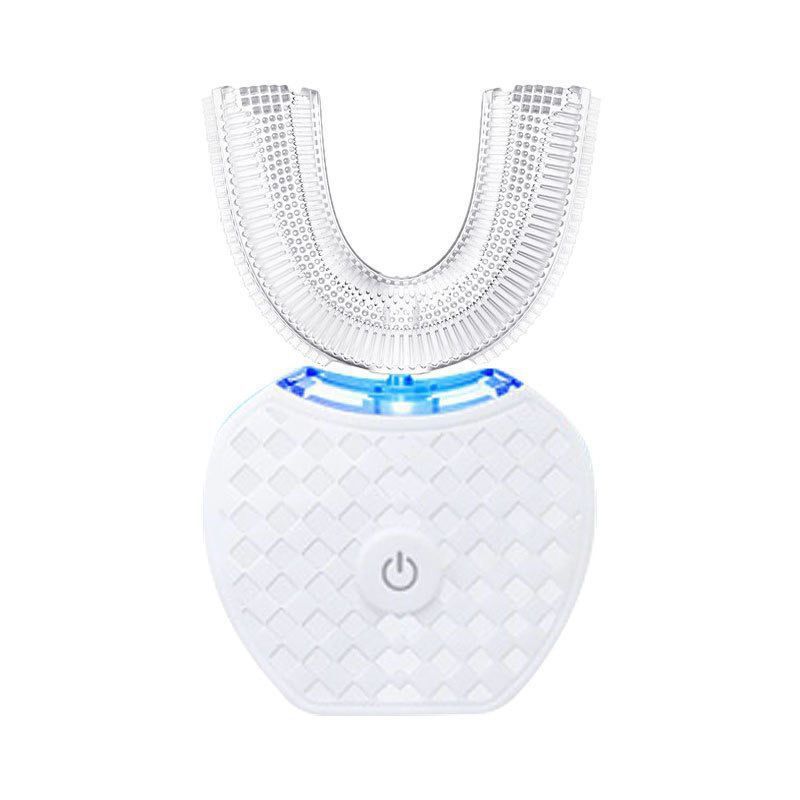
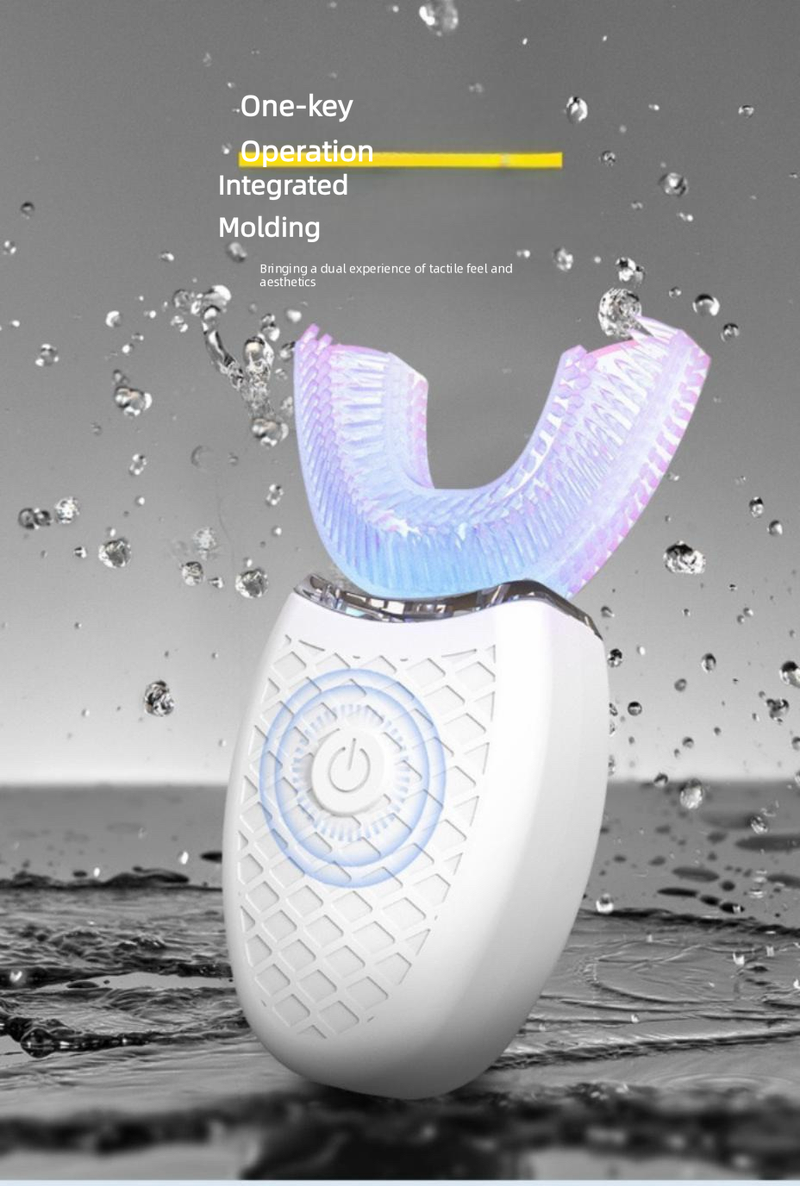
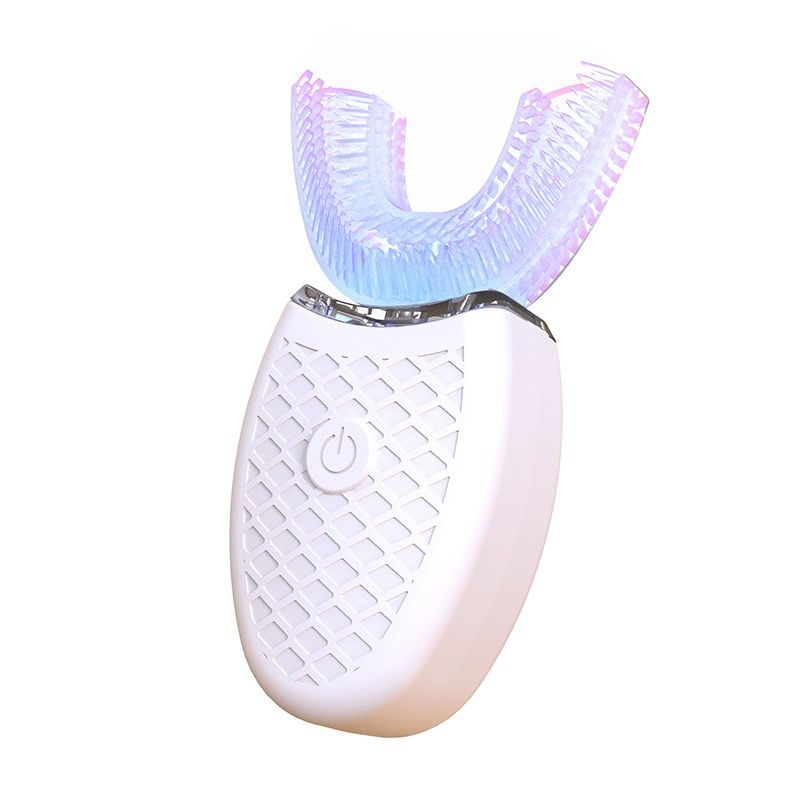
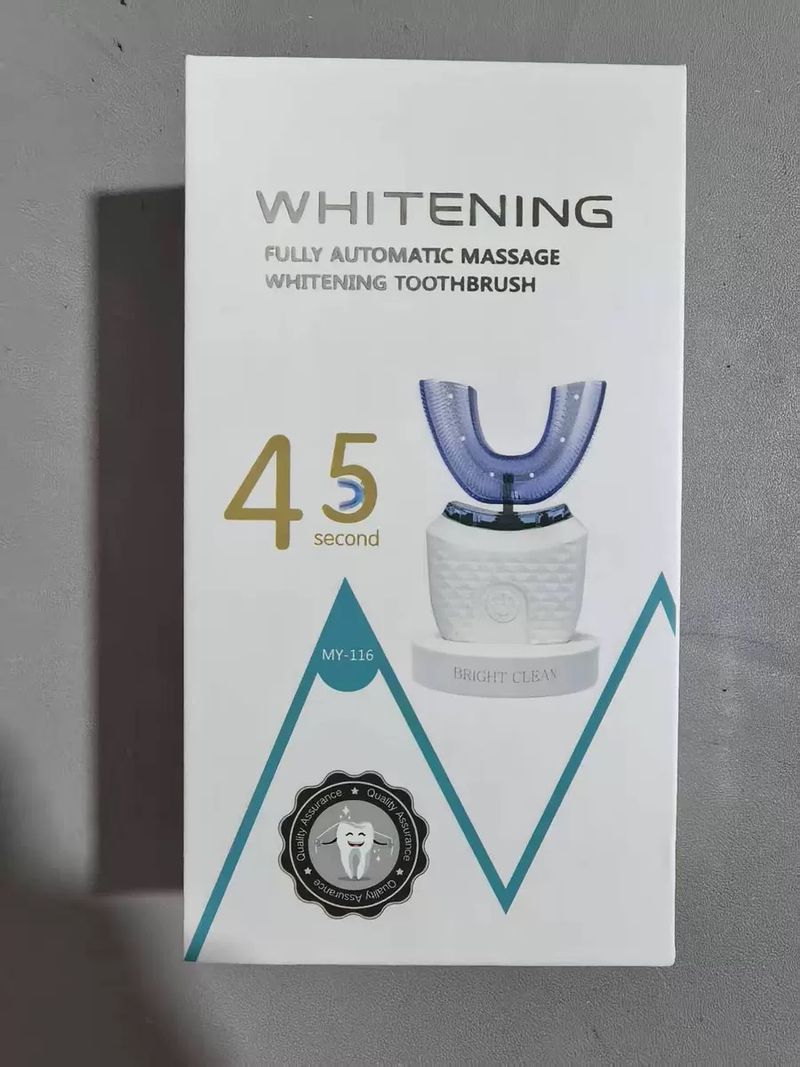
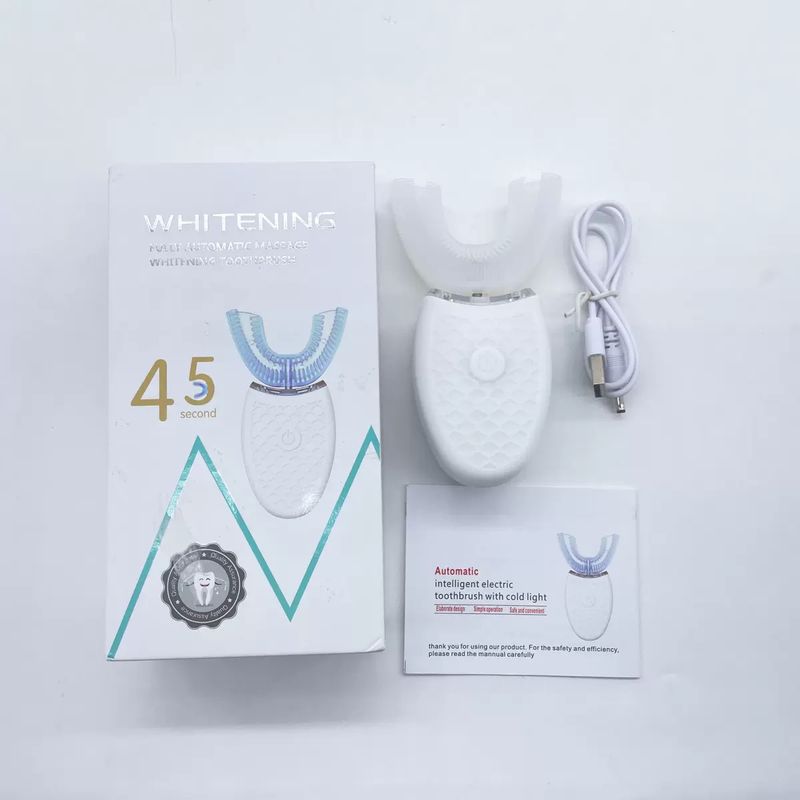
A U-shaped mouthpiece that surrounds all your teeth at once.
The Breakthrough That Makes Perfect Sense
Think about how dentists clean your teeth.
They don't use a tiny brush and spend 2 minutes manually scrubbing each tooth.
They use ultrasonic scalers that vibrate at high frequencies to break up plaque and tartar.
They clean multiple surfaces at once. They reach areas you can't.
Dr. Wilson realized: What if we could give people that same ultrasonic cleaning technology at home?
But in a format they could use every day without training.
The answer: A U-shaped mouthpiece with ultrasonic technology that does the work for you.
It’s absolutely worth the investment!
Reviewed in the United States on April 17, 2025
I decided to try the Hatmeo Smartbrush because it was reasonably priced and looked easier than traditional brushing. I’ve been dealing with receding gums and sensitivity for years, and brushing had become something I dreaded—especially in the mornings when my hands felt stiff. I could never tell if I was brushing properly, and sometimes it felt like no matter how careful I was, my gums would still bleed.
Why Traditional Brushing Can Never Do This
Here's the fundamental limitation of any toothbrush (manual or electric):
You can only clean the surface the bristles are touching RIGHT NOW.
Even with perfect technique, you're cleaning maybe 3-4 teeth at a time. It takes you roughly 30 seconds per "quadrant" of your mouth if you're doing it right.
Most people?
They spend maybe 10-15 seconds per quadrant.
They get bored.
They rush.
They skip areas.
And the areas they miss? That's where all the problems start.
The back molars (most common site for cavities). The gumline (where gum disease begins). Between teeth (where plaque hardens into tartar).
It's not because you're lazy or bad at brushing.
It's because asking someone to manually clean hundreds of surfaces perfectly, twice a day, every day, forever... is an unrealistic expectation.
The Hatmeo Smartbrush works completely differently.
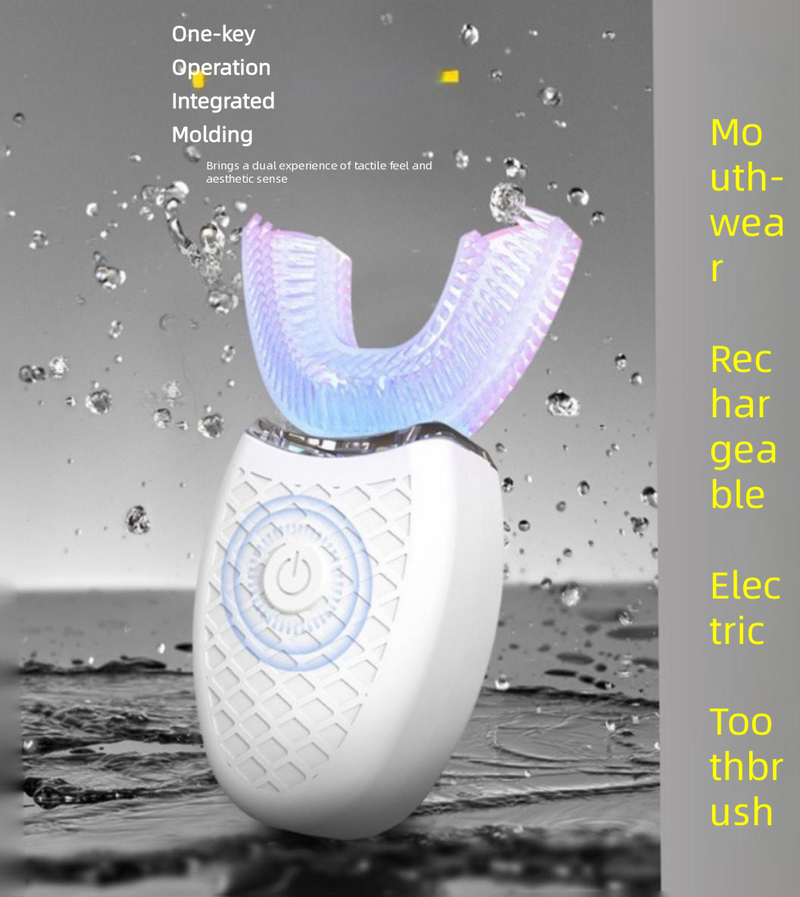
You place the U-shaped mouthpiece in your mouth. Press the button. And let it work for 30 seconds.
Here's what happens:
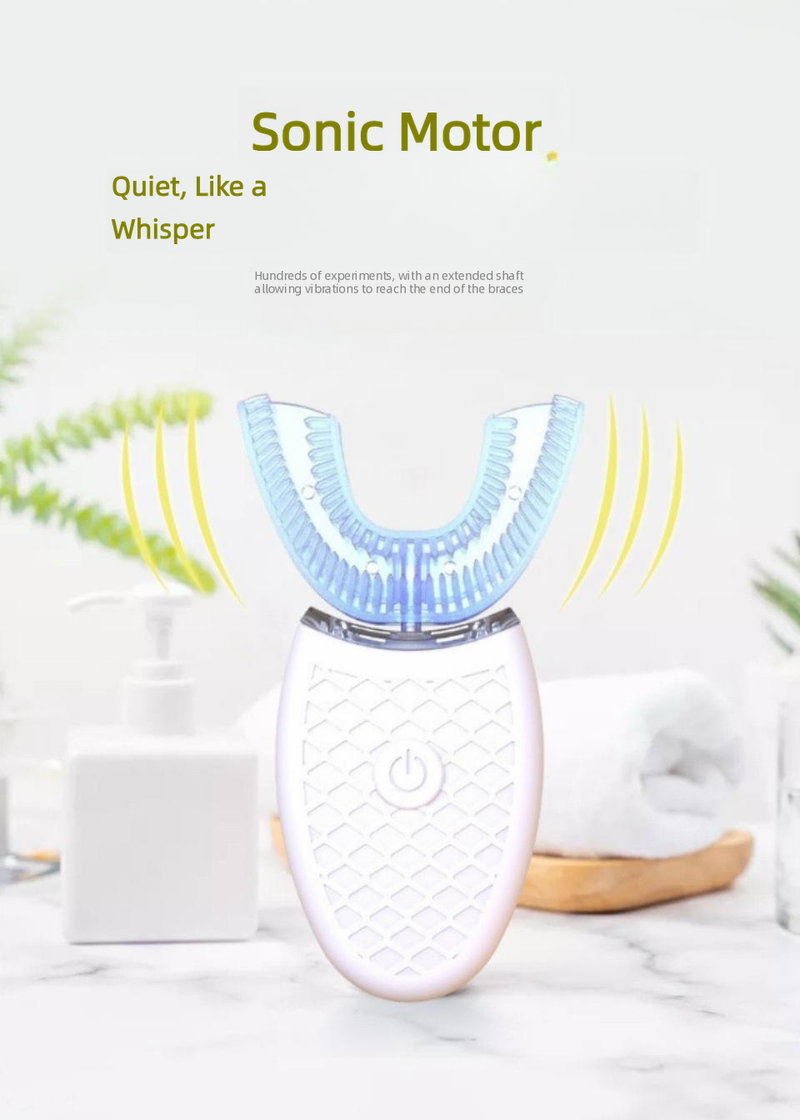
360° Ultrasonic Technology creates 40,000 vibrations per minute. These high-frequency vibrations:
Break up plaque at a microscopic level before it can harden
Disrupt bacterial biofilm across all surfaces simultaneously
Create micro-bubbles that clean between teeth (similar to a water flosser effect)
Massage gums to improve blood flow and reduce inflammation
Full-Mouth Coverage means every surface gets cleaned at the same time:
Front and back of every tooth
Along the gumline (where gum disease starts)
Inner surfaces of back molars (the spots you usually miss)
Bristles are soft enough not to damage gums (no more bleeding from aggressive brushing), but arranged in a pattern that ensures contact with every tooth surface.
The ultrasonic vibrations do the cleaning work—the bristles just need to be in position.
The result?
In 30 seconds, you get coverage that would take 5-10 minutes of perfect manual brushing to achieve.
And because you're not relying on your technique, memory, or patience, you never miss spots.
"But I Have a $200 Electric Toothbrush..."
Here's what electric toothbrush companies don't want you to know:
Those brushes still require you to:
- Move them correctly to each tooth
- Hold them at the right angle
- Spend enough time on each surface
- Remember which areas you've cleaned
One study found that most people using electric toothbrushes:
- Only brush for 46 seconds (not the recommended 2 minutes)
- Miss the back molars completely
- Don't reach the inner surfaces adequately
- Skip the gumline where plaque accumulates
An expensive electric toothbrush doesn't fix the fundamental coverage problem.
You're still cleaning one tooth at a time. You're still depending on your technique. You're still probably missing 40% of your tooth surfaces.
The Smartbrush eliminates the coverage gap entirely.
The average American spends $1,986 per year on dental care.
That's routine cleanings, cavity fillings, gum treatments, and emergency visits.
A single cavity filling costs $200-$500.
A root canal costs $1,500-$3,000.
Treating gum disease costs $500-$4,000 depending on severity.
The Smartbrush costs less than one cavity filling.
And if it prevents even one cavity or one gum treatment over the next few years by actually cleaning the areas your regular toothbrush misses, it's paid for itself many times over.
Why Haven't You Heard About This?
Good question.
The oral care industry is worth $50 billion annually.
The big brands have spent decades convincing you that if you just brushed better, longer, or with their newest $200 brush, your teeth would be healthy.
They're not incentivized to tell you the design itself is the problem.
And dentists?
Many are genuinely unaware that full-mouth ultrasonic technology is now available for home use.
They learned traditional brushing in dental school and haven't questioned whether there's a better way.
But a growing number of dental professionals are starting to recommend U-shaped ultrasonic brushes - especially for patients who:
- Have persistent gum problems despite "good" hygiene
- Struggle with proper brushing technique
- Have limited dexterity (arthritis, carpal tunnel, motor control issues)
- Simply want more thorough cleaning in less time
Frequently Asked Questions:
Q: Is this safe for sensitive teeth and gums?
Yes. The ultrasonic vibrations and soft bristles are gentler than manual scrubbing while being more effective at removing plaque. Many users with sensitivity find it more comfortable than traditional brushing.
Q: Can I use this if I have crowns, veneers, or braces?
Yes. The Smartbrush is safe for all dental work. Many users with braces report it's easier to clean around brackets than traditional brushing since it reaches all surfaces simultaneously.
Q: Will this replace flossing?
The ultrasonic vibrations and bristle coverage reach between teeth better than traditional brushing, significantly reducing the need for flossing. However, for optimal gum health, occasional flossing is still recommended.
Q: Does it really work in just 30 seconds?
Yes. Because it cleans all surfaces simultaneously, 30 seconds of full-mouth coverage equals several minutes of sequential tooth-by-tooth brushing. The ultrasonic action is also more efficient at breaking up plaque than manual scrubbing.
Conclusion: Is it worth it?
100% Yes. With dental problems occurring more frequently, the Smartbrush is the cheapest and best way to keep your mouth healthy, clean, and your teeth whiter than ever.
The time to buy Smartbrush is now, before this discount expires. The device is flying out the door.
You will quickly understand why thousands of people in the US have already ordered the device!
Smartbrush cleans better than any regular toothbrush.
The best part is the price. If it's still on sale for less than $ 140, be sure to take your chance!
In case you hadn't already realised, I AM EXCITED! You won't find a better toothbrush for this price.
This device has helped thousands find relief from painful brushing, gum sensitivity, and ongoing dental issues.
I’m confident this will help you as well.
Now, just imagine…
Say goodbye to the hassle of brushing with stiff hands or aching gums.
Say goodbye to the embarrassment of yellowing teeth and constant dental problems.
Say goodbye to the discomfort and stress of painful, outdated brushing routines.
That’s all possible with the
Hatmeo Ultrasonic Smartbrush.
And the best part?
It only takes 30 seconds twice a day to notice a real difference.
All you need to do is place the Smartbrush in your mouth…
Press the button to start your preferred mode…
And then let it do all the work—no scrubbing, no soreness, just clean.
Now, you’re probably wondering…
How do I buy a real Smartbrush?
No fakes, the original is essential! Don't settle for an old, outdated prototype!
I’ve decided to offer a special limited-time discount, giving you the chance to own your very own Hatmeo Smartbrush at 50% OFF.